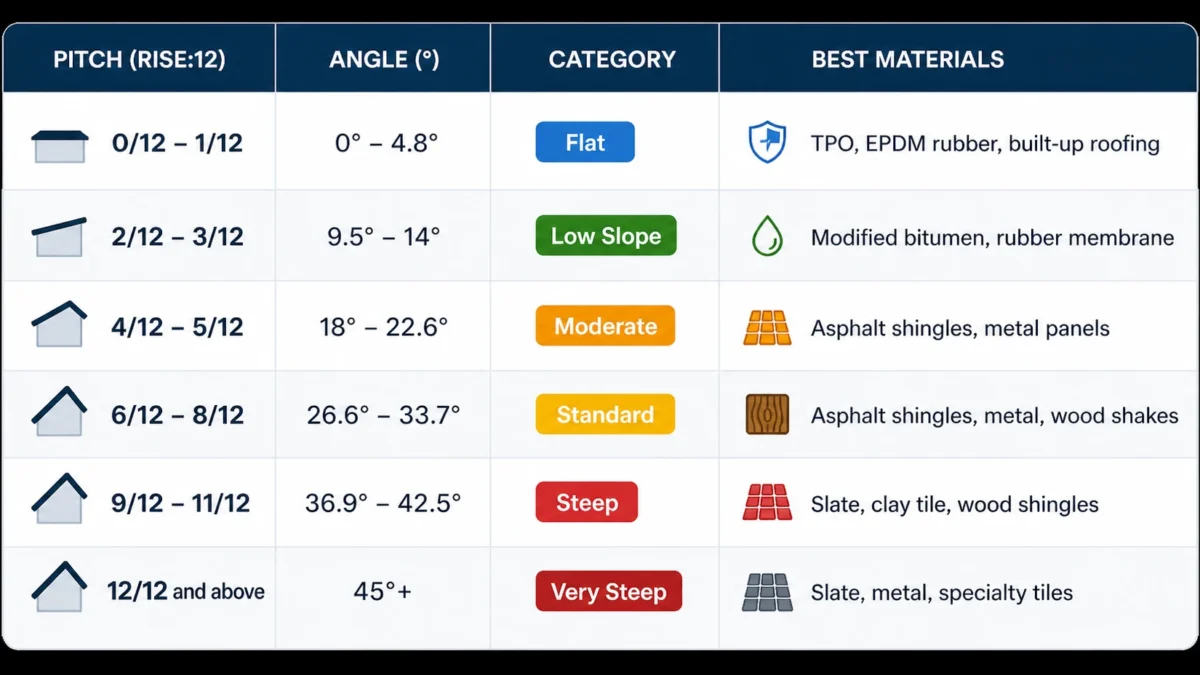
Have you ever wondered looking at the house that some roofs are very flat while others are just very steep? That difference is called the roof pitch. Now the roof pitch tells us how flat or steep a roof is. Today we are going to share a roof with chart which is a simple tool that helps builders homeowners and architectures to understand and corporate all the different group slopes in one easy place.
In this guide I’ll be explaining what roof pitch is, how it is measured and what are the different types of roofs look like and how to choose the right one for your home, So let’s get it started…
What’s roof pitch?
Well.. A roof pitch which is a number that tells you how the slope of your roof is. whether it is steep or flat. It is always shown as the ratio of rise over run. The rise is how many inches the roof goes up and while on the other hand the run is always 12 inches going across so 6 by 12 pitch means the roof rise 6 in for every 12 inches across.
Check out – Roof Pitch Calculator
Roof Pitch Chart
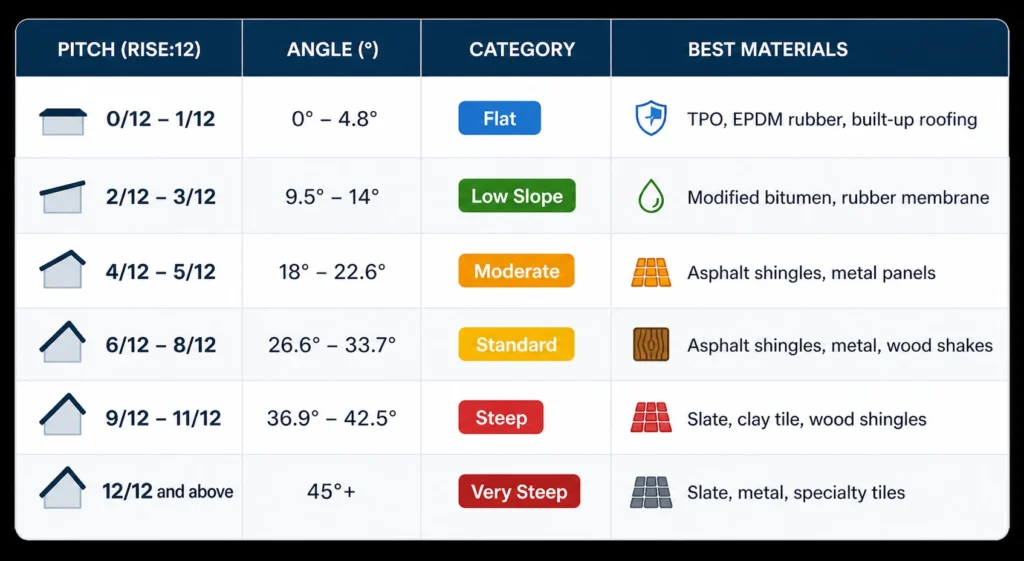
Here is a complete root beet chart showing common slopes and their angles in different degrees, categories and what roofing material work best at each pitch level.
How Would You Measure Your Roof Pitch?
You do not need any special tool or training to find your roof pitch. It is a simple step by step method that you can follow.
- Get a level and rule or a measuring tape
- Now you can hold that level flat against the roof laughter until the bubble is perfectly centered.
- From the 12 inch mark on the level measure straight down to the rafter
- That number in inches is your rise and if you measure 6 in your pitch is 6/12.
But Why does Roof Pitch Matters?
There can be many reasons but some of the major reasons are water drainage, snow load, material choice, cost and of course the looks.
- Water drainage: steeper roof drain drain faster while flutter roof can collect water and may leak if they are not waterproof.
- Snow load: in areas with heavy snowfall a steep beach which is about 9 by 12 or even higher lets off slides of quickly before it becomes too heavy for the structure.
- Material choice: Asphalt shingles need at least a 2×12 slope while rubber membranes are used on flat roofs, and slate or clay tiles work best on the steep roofs.
- Cost – usually steeper roofs cost more to build and repair because they need more labour and materials while flatter roofs are cheaper upfront but they may need more maintenance after some time.
- Appearance: as we know the pitch of any structure shows the personality of the building. A flat roof looks modern while steep roof looks grand and classic.
Also Read: