When I was growing up, my dad worked as a roofer. While most kids talked about video games and sports, I often heard conversations about shingles, flashing, leaks, and roof designs.
One thing I heard many times was homeowners asking:
“Should I choose a hip roof or a gable roof?”🤔🤔
At first, I thought a roof was just a roof. But after spending years listening to my dad and learning more about roofing, I realized that the shape of a roof can affect everything from durability and cost to attic space and even energy efficiency.
In this guide, I’ll explain the difference between a hip roof and a gable roof in very simple language.
Hip Roof vs Gable Roof: In Short
If I had to explain the difference in just a few sentences, I’d say this:
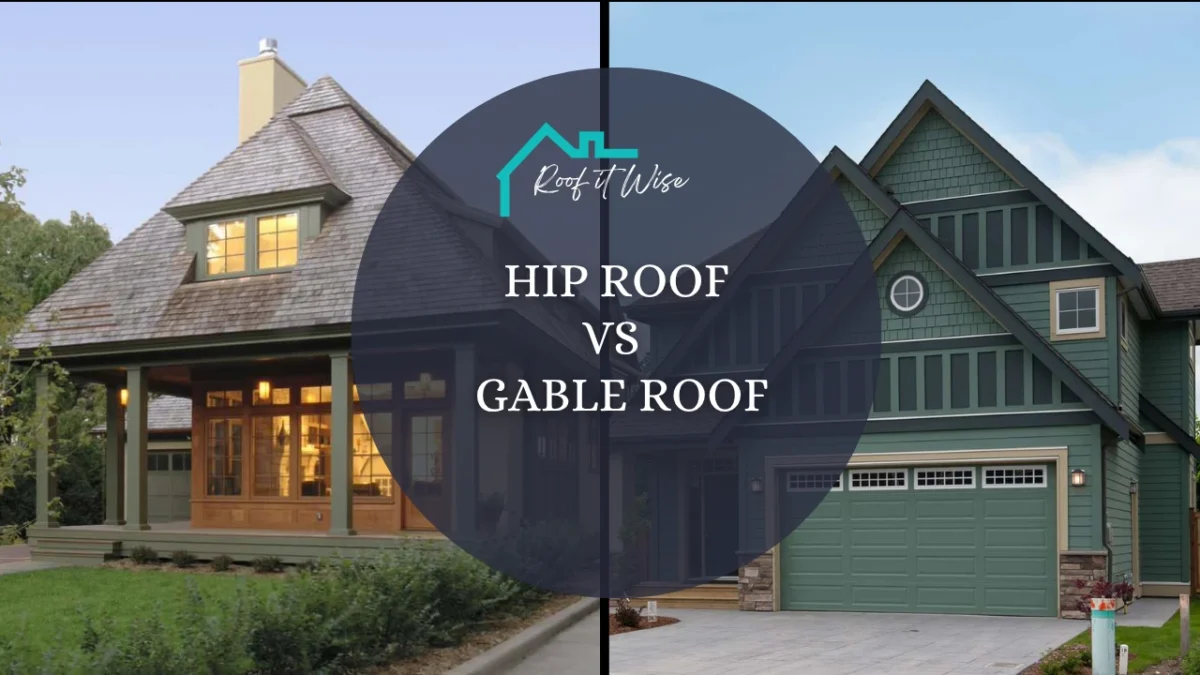
A gable roof has two sloping sides that meet at the top, creating a triangle shape on each end of the house. It’s one of the most common and affordable roof styles, and it provides plenty of attic space and good ventilation.
A hip roof, on the other hand, slopes down on all four sides. Because of its design, it’s generally stronger and more resistant to high winds, but it usually costs more to build and offers less attic space.
Think of it this way:
- Need more attic space and a lower budget? → Gable Roof
- Need better wind resistance and durability? → Hip Roof
Both roof styles can last for decades when installed properly, but the right choice depends on your climate, budget, and home design.
| Feature | Gable Roof | Hip Roof |
|---|---|---|
| Shape | Two sloping sides | Four sloping sides |
| Cost | Lower | Higher |
| Wind Resistance | Good | Excellent |
| Attic Space | More | Less |
| Ventilation | Better | Moderate |
| Best For | Most residential homes | Windy and coastal areas |
Now let’s take a closer look at each roof type and see where they shine.
What Is a Gable Roof?
A gable roof is the most common roof style you’ll see in many neighborhoods.
It has:
- Two sloping sides
- A peak at the top
- Triangle-shaped walls on both ends
Think of the roof shape that most kids draw when they draw a house. This is especially useful in areas that receive heavy snowfall, such as:
- Colorado
- Minnesota
- Michigan
- Vermont
- Canada
- Norway
- Sweden
For example, a homeowner in Colorado may prefer a gable roof because snow can easily slide off instead of accumulating on the roof for weeks during winter.
Advantages of a Gable Roof
1. More Affordable
A gable roof is simpler to build.
That means:
- Less labor
- Fewer materials
- Lower installation costs
This is one reason why it remains one of the most popular roof styles.
2. Bigger Attic Space
This is a huge benefit.
Because of the triangular shape, you get:
- More storage
- Better ventilation
- Potential attic conversions
Many homeowners convert gable attics into:
- Bedrooms
- Home offices
- Playrooms
Gable roofs generally provide more attic space than hip roofs.
3. Better Ventilation
The larger attic allows air to move more freely.
Good ventilation can help:
- Reduce moisture
- Lower heat buildup
- Improve energy efficiency
This is especially useful during hot summers.
4. Excellent Water and Snow Drainage
The steep slopes help water and snow slide off quickly.
This reduces:
- Water pooling
- Ice buildup
- Long-term roof damage
Gable roofs are particularly popular in snowy climates for this reason.
Disadvantages of a Gable Roof
1. Weaker Against Strong Winds
This is the biggest downside.
The triangular ends can catch wind like a sail.
During severe storms, wind pressure can damage the roof if it isn’t properly braced.
2. Can Require Extra Reinforcement
In hurricane-prone areas, builders often add:
- Extra bracing
- Stronger trusses
- Additional supports
These upgrades increase costs.
What Is a Hip Roof?
A hip roof slopes downward on all four sides.
Instead of having triangle-shaped ends, every side slopes toward the walls.
A hip roof has no vertical ends, which makes it stronger against wind because the pressure is distributed more evenly across the structure. Hip roofs are particularly popular in areas that experience hurricanes, tropical storms, and strong coastal winds, such as:
- Florida
- Louisiana
- Texas (especially Gulf Coast areas)
- North Carolina
- Japan
- Philippines
- Australia (cyclone-prone regions)
For example, homes along Florida’s coastline often use hip roofs because their four-sided design helps them withstand strong hurricane-force winds better than many other roof styles.
Advantages of a Hip Roof
1. Better Wind Resistance
This is probably the biggest advantage.
My dad always says:
“If the area gets strong winds every year, a hip roof is usually safer.”
Because all four sides slope downward, wind has less surface to push against. Hip roofs are generally more stable and perform better in hurricanes, storms, and high-wind areas.
Example
If you live in:
- Florida
- Texas coastal regions
- Hurricane-prone areas
A hip roof may be worth considering.
2. Stronger Overall Structure
Hip roofs are often called self-bracing because their design naturally adds strength.
This means:
- Less movement during storms
- Better structural stability
- Longer lifespan when properly installed
3. Better Curb Appeal
Many people simply think hip roofs look more premium.
The roof appears balanced from every angle.
This can improve the overall appearance of a home.
Disadvantages of a Hip Roof
1. More Expensive
This is the first thing my dad tells customers.
Hip roofs require:
- More materials
- More framing
- More labor
- More installation time
Because of the added complexity, hip roofs generally cost more than gable roofs.
2. Less Attic Space
Since all sides slope inward, the attic becomes smaller.
Example
Imagine two homes with the same footprint:
- Gable roof attic = enough room for storage
- Hip roof attic = much less usable space
This is one reason many homeowners prefer gable roofs.
3. More Roof Seams
More roof sections mean:
- More joints
- More valleys
- More places where leaks can happen
Poor installation can lead to water issues around seams and dormers.
Which Roof Lasts Longer?🤔
| Condition | Winner |
| High Winds | Hip Roof |
| Heavy Snow | Gable Roof |
| Lower Budget | Gable Roof |
| Maximum Strength | Hip Roof |
| Extra Attic Space | Gable Roof |
| Premium Appearance | Hip Roof |
| Easy Maintenance | Gable Roof |
My Dad’s Advice on Choosing a Right Roof
After years in roofing, my dad usually gives homeowners a simple recommendation:
Choose a Hip Roof If:
- ✅ You live in a windy area
- ✅ You want maximum durability
- ✅ You like a premium look
- ✅ Budget isn’t your biggest concern
Choose a Gable Roof If:
- ✅ You want to save money
- ✅ You need attic space
- ✅ You live in an area without severe wind storms
- ✅ You want a simple roof design
Final Thoughts
If you ask me what I’ve learned from growing up around roofing crews, it’s this:
There is no perfect roof.
A hip roof is stronger and more resistant to high winds, but it costs more and gives you less attic space. A gable roof is affordable, provides excellent ventilation and storage space, and sheds rain and snow efficiently, but it’s more vulnerable during strong wind events.
The best choice depends on:
- Your budget
- Your climate
- Your home’s design
- Your long-term goals
As my dad always says:
“The best roof isn’t the most expensive one. It’s the one that fits your house and your weather.”
Also Read: